 All American Girls Professional Baseball League
 It started with a throwaway comment in an article about the 2026 MLB All-Star game. Dylan Cease (Toronto Blue Jays) had been selected as the starting pitcher for the American League, and the article mentioned that Cease’s paternal grandmother had been a professional baseball player. My first thought went to the All-American Girls Professional Baseball League of course, and because I’m a professional genealogist (and life-long Blue Jays fan), I knew I needed to puzzle it out.
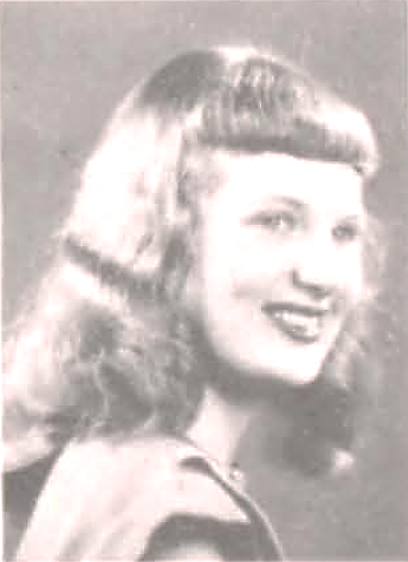
A little research led me to Betty Cecelia Wright. Betty was born 8 January 1930 in Anderson, Indiana to Jesse Wright and Nellie Hodge. She married Harold Cease in the 1950s and died on 23 April 2009. I had found Cease’s baseball-playing-grandmother, but she wasn’t listed in the AAGPBL player database, and a popular social media post with newspaper clipping purporting to be about Betty was a red herring; Betty was only 12 years old when that clipping was originally published in 1942 and still living in Anderson, not Atlantic City, NJ. I needed to dig a little bit more, and what I found brought to light a significant new chapter in the AAGPBL story.
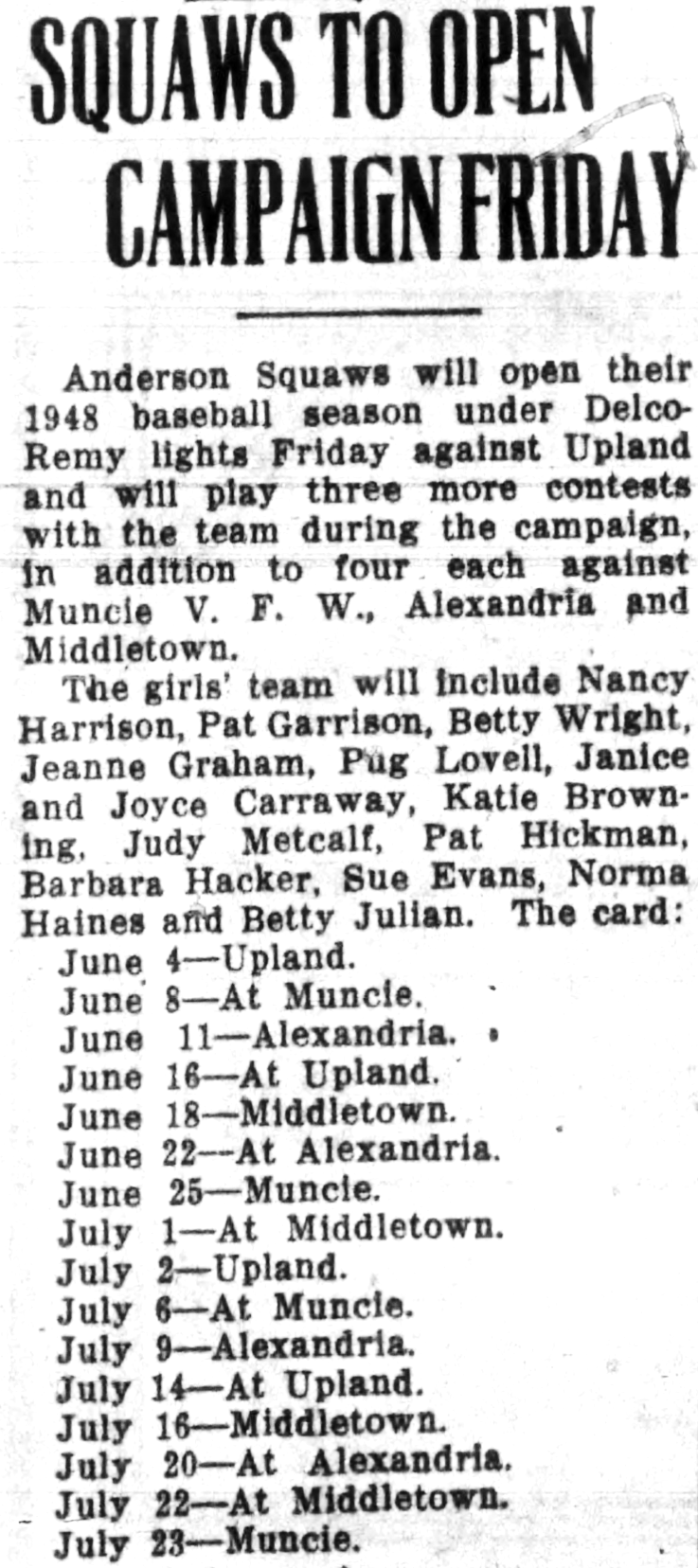
An article from the Anderson Daily Bulletin reports that in 1948, Betty was playing baseball with the Anderson Squaws. Further research revealed that the Anderson Squaws were part of the Central Indiana Girls’ Baseball League which for the 1948 and 1949 seasons served as an AAGPBL affiliate. 1948 saw some of the biggest changes to the AAGPBL’s rules and equipment including switching from underhand to overhand pitching, a decrease in the ball size from 11” to 10 3/8”, and lengthening of the pitching distance from 43’ to 50’. The base paths remained at 72’ which they had been since 1946. Unlike some of the other junior leagues with brand-new teams, the CIGBL was made up of existing softball teams that adopted baseball rules and style in an effort to create a direct training pipeline to the AAGPBL Initially, there were five teams in the CIGBL – Alexandria, Anderson, Upland, and Muncie’s VFW and Middletown Gardens teams.
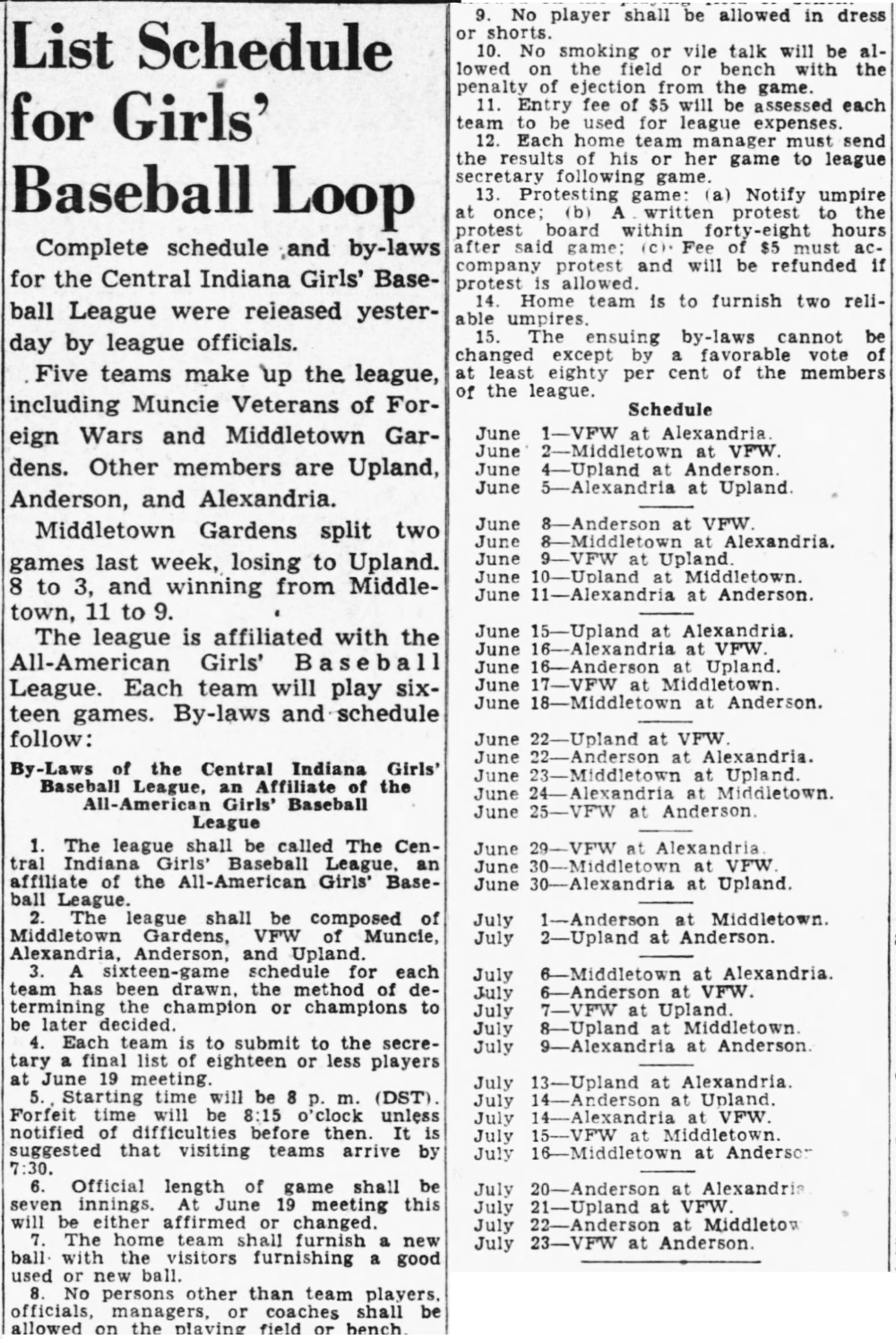
Each team was meant to play 16 games, but sometime before the end of the first season, it appears that Muncie VFW left the league; the last stat I could find showed that the team had won only a single game in twelve appearances. By the end of that first season, Upland and Anderson were in the top two spots and would face each other in a three-game series. The series was tied at one-a-piece, but the Anderson team failed to appear for game three. Upland won by default.
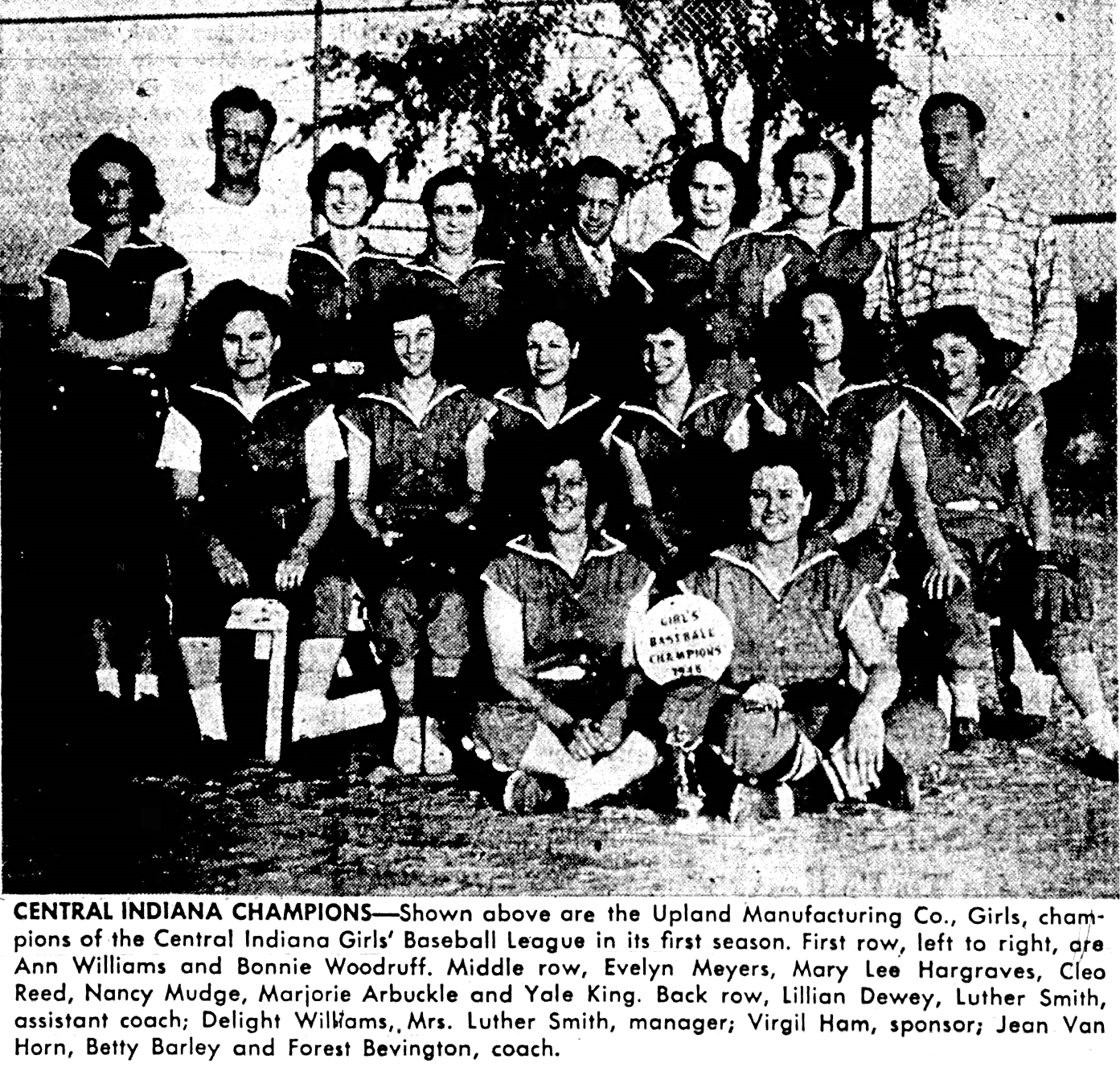
Between the 1948 and 1949 seasons, there were baseball camps and tryouts for AAGPBL teams. Some women participated, but most didn’t, and only three players would be offered contracts with the AAGPBL – Nancy Mudge and Jean Van Horn from Upland, and Beverly Hatzell from Middletown Gardens. Mudge and Hatzell accepted, but Van Horn did not. She participated in spring training but took a job as the director of women’s athletics at Taylor University in Upland where she had recently graduated.
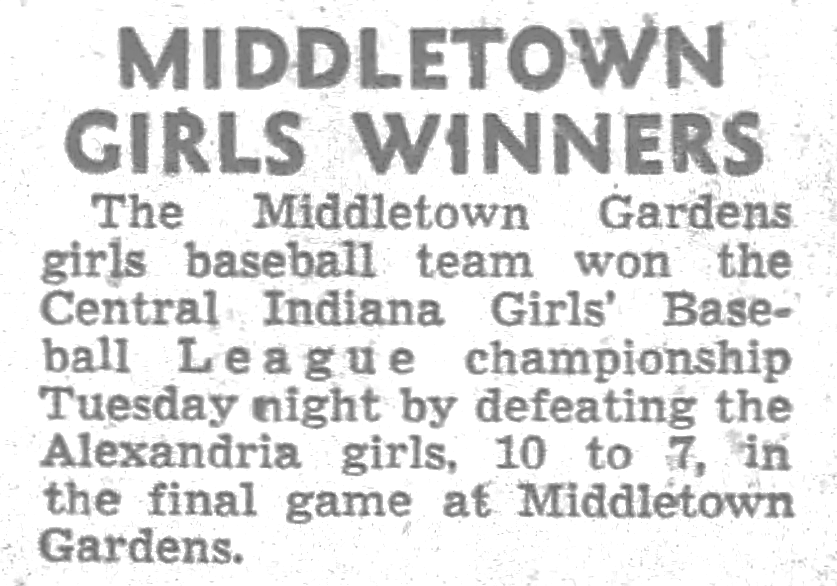
According to various newspaper reports but without any explanation, the CIGBL went defunct sometime near the start of the 1949 season, but the teams decided to play the schedule as exhibition games with some tournaments thrown in. There were a few different tournament styles towards the end of the season, and although the CIGBL had been disbanded, the teams decided to play a League Championship anyway with Middletown Gardens coming out on top 10-7 against Alexandria.
It doesn’t appear that any further players beyond the three mentioned were offered contracts after the 1949 season. Nancy Mudge played 6 seasons in the AAGPBL from 1949 through 1954, mainly playing second base. Beverly Hatzell, a right-handed pitcher, played three seasons from 1949 through 1951.
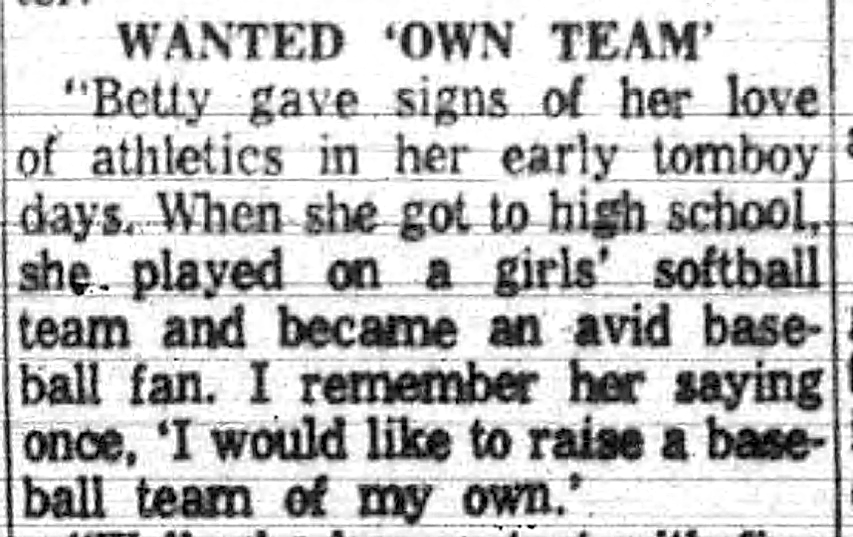
Although I couldn’t find many specifics about Betty’s time playing softball and baseball, her story led me to this little part of AAGPBL history that I wouldn’t have found and researched any other way. She may not have raised an entire baseball team, but her grandson is carrying on her legacy one major league game at a time.

